Gurgling, slow, or backing up: read the symptom
Most drain calls start with a small sign. A sink that takes a minute to empty, a tub that leaves a ring of grey water, or a gurgle from a different fixture when you run the washer. Each one points to a different spot in the line.
One slow fixture usually means a clog in that fixture's own branch. Two or three slow fixtures at once point to a shared line further down. Water coming up in the tub when you flush is the one to treat as urgent, because the blockage is in a line that serves the whole house.
Which drain is clogged? Match what you see
Use this as a quick sort before you pick up the phone. It helps the dispatcher send the right cable and gear.
| What you notice | Where the clog likely sits | What it usually calls for |
|---|---|---|
| One sink or tub drains slowly | The trap or branch under that fixture | A hand auger or small cable on that drain |
| Kitchen sink full of grey water, dishwasher also slow | Grease and food build-up in the kitchen branch | Cabling the kitchen line, sometimes a cleanout visit |
| Shower water pools around your feet | Hair and soap packed in the shower trap | Pulling the strainer and cabling the trap |
| Toilet gurgles when the sink drains | A shared branch or main line is partly blocked | Cabling from a cleanout, then a camera look if it returns |
| Water surfaces in a tub or floor drain | The main drain line is blocked | Main-line cabling, treated as urgent |
A line that clogs again within weeks is a sign of damage or roots, not just buildup. Ask about a camera inspection if that happens.
Drain won't clear and the water is rising?
Our dispatcher can talk you through shutting off water use and send a technician with a cable. Call the 24/7 line any hour.
Drain backup tonight? Do this while you wait
Water rising from a drain can spread into flooring fast. These steps limit the damage until the technician arrives.
- 1
Stop all water use
No flushing, no laundry, no dishwasher. Every gallon you send down has nowhere to go and may come back out of the lowest drain.
- 2
Lift valuables off the floor
Move rugs, boxes and electronics out of the splash zone. Keep power cords and outlets away from any standing water.
- 3
Skip the chemical drain cleaner
Liquid openers sitting in a blocked pipe can splash back on whoever works on it. Tell the dispatcher if you already poured some in.
- 4
Call the 24/7 line
Reach our dispatch and describe which fixtures are affected. After hours and overnight calls are handled the same way as daytime ones.
Kitchen sink clogs and how they get cleared
Kitchen drains clog differently from bathroom ones. Cooking grease cools inside the pipe, coats the walls, and catches coffee grounds, rice and scraps until the passage narrows to a straw. That is why a kitchen sink can go from slow to fully stopped in a single week.
We clear it with a cable that cuts through the buildup, then flush the line so the grease does not simply shift down to the next bend. If your dishwasher drains into the same line, we check that it runs clear too. Garbage disposal trouble is its own job, handled under Garbage Disposal Repair.
Shower and tub drains that will not empty
Standing water around your ankles in the shower is almost always hair wrapped in soap film just below the strainer. It forms a mat that holds water back. Pulling the strainer and cabling the trap usually fixes it without opening anything else.
If the tub and shower both drain slowly, the clog sits past the point where they join. Many Pico Rivera homes were built in the 1950s, and the census shows a median build year of 1957. Older drain lines tend to have rough interiors that catch debris, so a repeat clog in an older house is worth a closer look.
What shapes the price of a drain job
The quote you hear on the phone comes down to a few drain-specific things.
Where the clog sits
A fixture trap is quick work. A clog deep in a branch or the main line takes longer cable and more time.
Access to the line
A cleanout makes cabling straightforward. With no cleanout, we may need to go in through a fixture or a vent.
Type of blockage
Soft buildup clears fast. Roots, scale or a collapsed section need heavier tools or a separate repair.
Time of the call
A 3 a.m. visit is scheduled differently from a Tuesday one, and you hear the terms before we begin.
Follow-up work
A camera look or Hydro Jetting adds scope, and we describe it before doing it.
Snaking, cabling, and when it is more than a clog
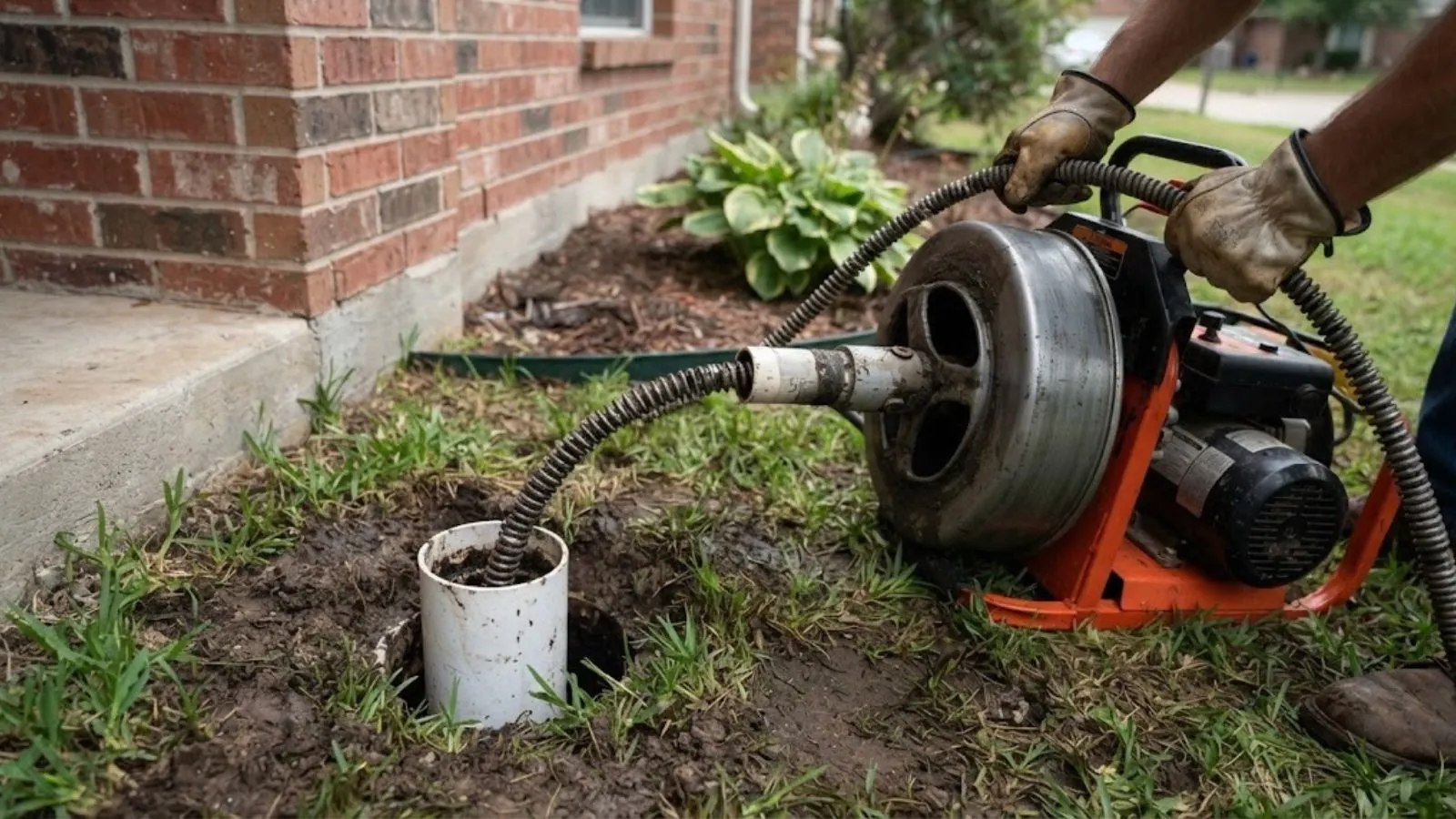
Snaking and cabling are the same family of tools. A hand-fed snake handles a fixture trap. A powered cable on a drum reaches farther and spins a cutting head through grease, hair and light roots. Cabling the main line from a cleanout is the usual fix when several fixtures back up together.
When a line keeps clogging, a drain line leak is sometimes part of the story. A small crack lets soil and roots in and wet spots show up in a yard or crawlspace. A camera and a pressure check tell you whether you need cleaning or a repair, and our Leak Detection page explains how we confirm it.
For big grease or scale, the better answer may be Hydro Jetting, and for a main line that keeps failing, Sewer Line Cleaning covers the heavier work. If you live in Norwalk or Commerce, we run the same dispatch out to you, see our Norwalk page.
Standards and sources behind this page
We clear drains by the manufacturer's directions for the cable or jetter being used.
Questions we hear most
Yes. A main line that backs up at 2 a.m. gets the same attention as a weekday call, because the line is staffed around the clock. Less urgent clogs may fit a same-day slot when available.
Call the line and tell us which fixtures are backing up so the right cable goes on the truck.
If only one fixture is slow, the clog is probably in its own branch. If several drain slowly or water appears in a tub or floor drain, the main line is the likely culprit.
We advise against it. The liquid can sit in the pipe, damage older metal drains, and splash on the person working on it. Tell the technician if you already used it.
Snaking is the hand-fed tool for a fixture trap. Cabling uses a powered drum and a cutting head to reach farther along the line. We choose based on where the clog is.
Grease hardens on pipe walls and collects food. If cleaning gives only a few weeks of relief, ask us to look at the line with a camera.
Yes. A cracked line lets in soil or roots, which block flow and keep returning. A camera inspection shows whether it is a clog or a break.
Get the drain running again tonight
Water that will not leave your house is not a problem to sleep on. Reach the 24/7 dispatch line and we will schedule a visit as soon as a technician is free.