Confirm the leak before you pay to find it
The EPA suggests a simple meter check. It costs nothing and tells you whether to schedule a visit.
- 1
Stop every water use
Turn off taps, the dishwasher, washer and ice maker. Make sure no one flushes a toilet during the test.
- 2
Read the meter
Note the dial or digital reading, including the small leak indicator if there is one.
- 3
Wait two hours
Do not use any water in that time.
- 4
Read it again
EPA says that if the meter changes at all, you probably have a leak. Test toilets next with a few drops of food coloring in the tank. Color in the bowl after 10 minutes, without flushing, means a flapper leak.
What a running meter or high bill is telling you
EPA says average household leaks waste more than 9,300 gallons a year, and about nine percent of homes leak 50 gallons or more a day. A family of four using over 12,000 gallons a month in a cooler month may have a serious leak.
If your bill jumped and the meter test shows movement, the water is going somewhere. Your water provider may be the City of Pico Rivera Water Division or Pico Water District, so check which one bills you before you ask a billing question. Call us to book the location work.
How we find it: methods and what each one finds
We pick the method for the symptom. Often two methods together confirm one spot.
| Method | What it detects | Typical use |
|---|---|---|
| Acoustic listening | The sound of water escaping a pressurized pipe | Slab, wall and buried-line leaks |
| Thermal imaging | Temperature differences from wet material or hot-water lines | Ceilings, walls and floors |
| Pressure testing | Whether an isolated line holds pressure | Confirming a suspect pipe before digging |
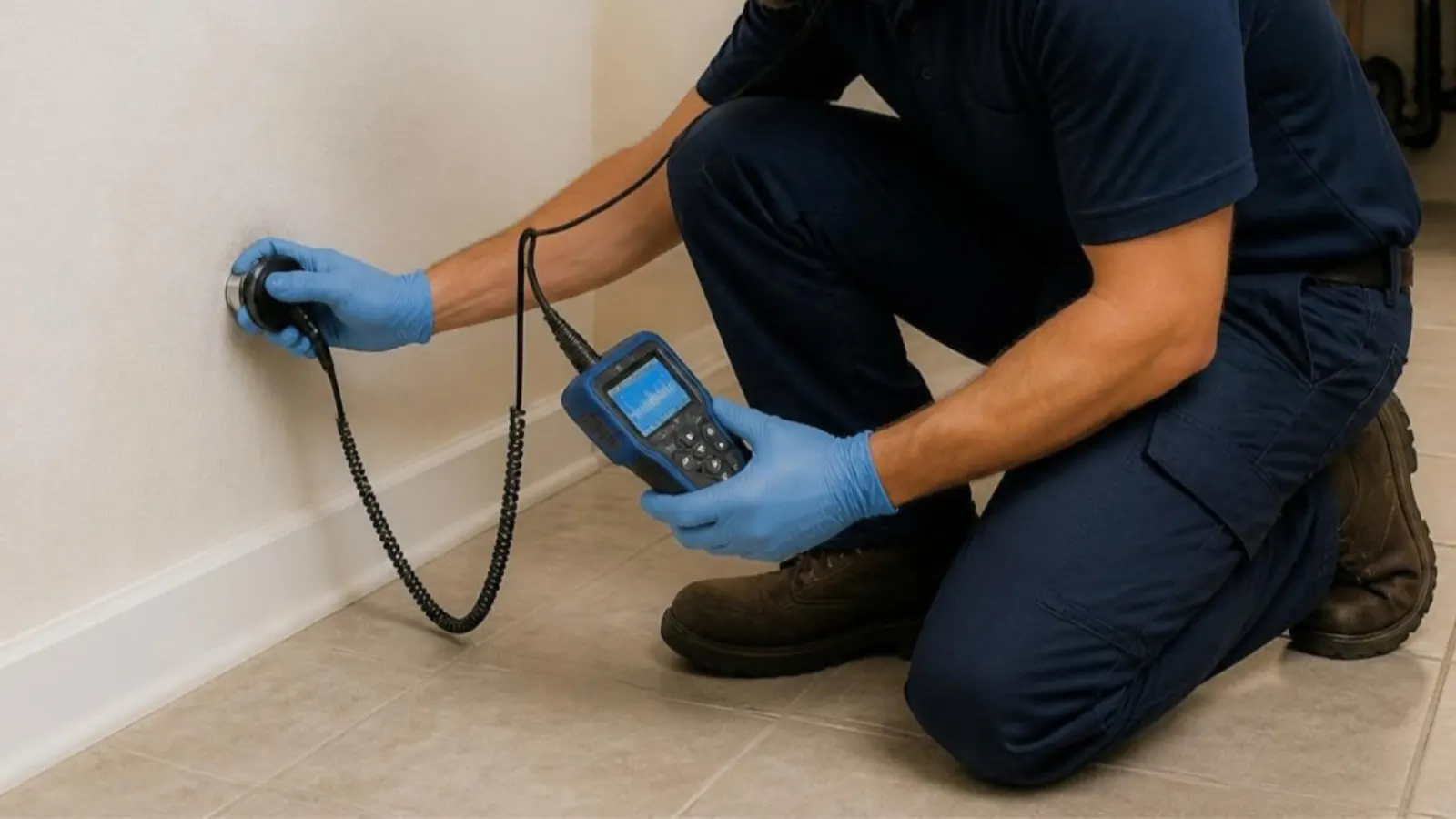
| Moisture meter | Moisture content inside drywall or wood | Mapping the wet area on a wall or ceiling |
| Tracer gas | A safe gas escaping a sealed line and rising through soil | Buried lines when sound is weak |
| Camera inspection | The inside of a drain pipe | Drain line leaks and root entry |
No method works on every job. We tell you what we used and what we saw.
Meter moving with everything off?
Give us your two readings and we will tell you where to start. Reach the 24/7 line for same-day detection when available.
Where the leak is hiding: location by location
Each location has its own clue and its own way in.
Active leak or flooding: when the clock matters
Water spreading through a ceiling, a wet outlet, or a meter that spins with everything off is urgent. Close the main valve at the house, turn off power to wet areas at the breaker, and move belongings aside. Take photos of damage before you clean up.
We treat these as same-day and after-hours calls. Many Pico Rivera homes are older, with 86.2 percent built before 1980 per the census, so aging pipe is a common source and worth testing. Ask about Burst Pipe Repair if a line has already failed.
What shapes the cost of leak detection
Detection pricing follows the size of the search.
Number of suspect areas
One wall is quicker to check than a whole house.
Tool combination
Thermal plus acoustic plus pressure takes longer than a single tool.
Access
Crawlspaces and meter boxes are easier than finished interiors.
Repair scope
Detection and repair are priced separately so you can decide once you know.
Gather this before the technician arrives
Good notes shorten the search.
- Meter reading now and two hours later.
- Photos of stains, wet spots or damp soil.
- The date your bill went up.
- Which fixtures share the affected wall.
- The location of the main shutoff and the meter.
- Call the dispatch line once you have the readings.
Standards and sources behind this page
The two-hour meter test and the toilet dye test come from EPA WaterSense Fix a Leak Week guidance, and EPA also advises calling a licensed plumber for help.
Questions we hear most
Yes. An active leak at night or on a weekend gets an answer from the 24/7 desk. A slow hidden leak can often be booked into a same-day slot when available.
Call the line and say whether water is spreading.
We use acoustic listening, thermal imaging, moisture meters and pressure tests to narrow the spot, then open only that spot.
Stop all water use, read the meter, wait two hours, and read it again. If it changes at all, EPA says you probably have a leak.
Yes. We isolate zones and check for pressure loss. A small irrigation leak wastes water fast, so shut the zone off if you can.
We test the plumbing lines feeding the pool. Leaks in the pool shell itself need a pool specialist.
It depends on which side of the meter it is on. Ask your water provider about responsibility, and we can confirm where the leak sits.
Find the leak, then decide
We locate first and quote repair after. Call the 24/7 line and give us your meter readings.