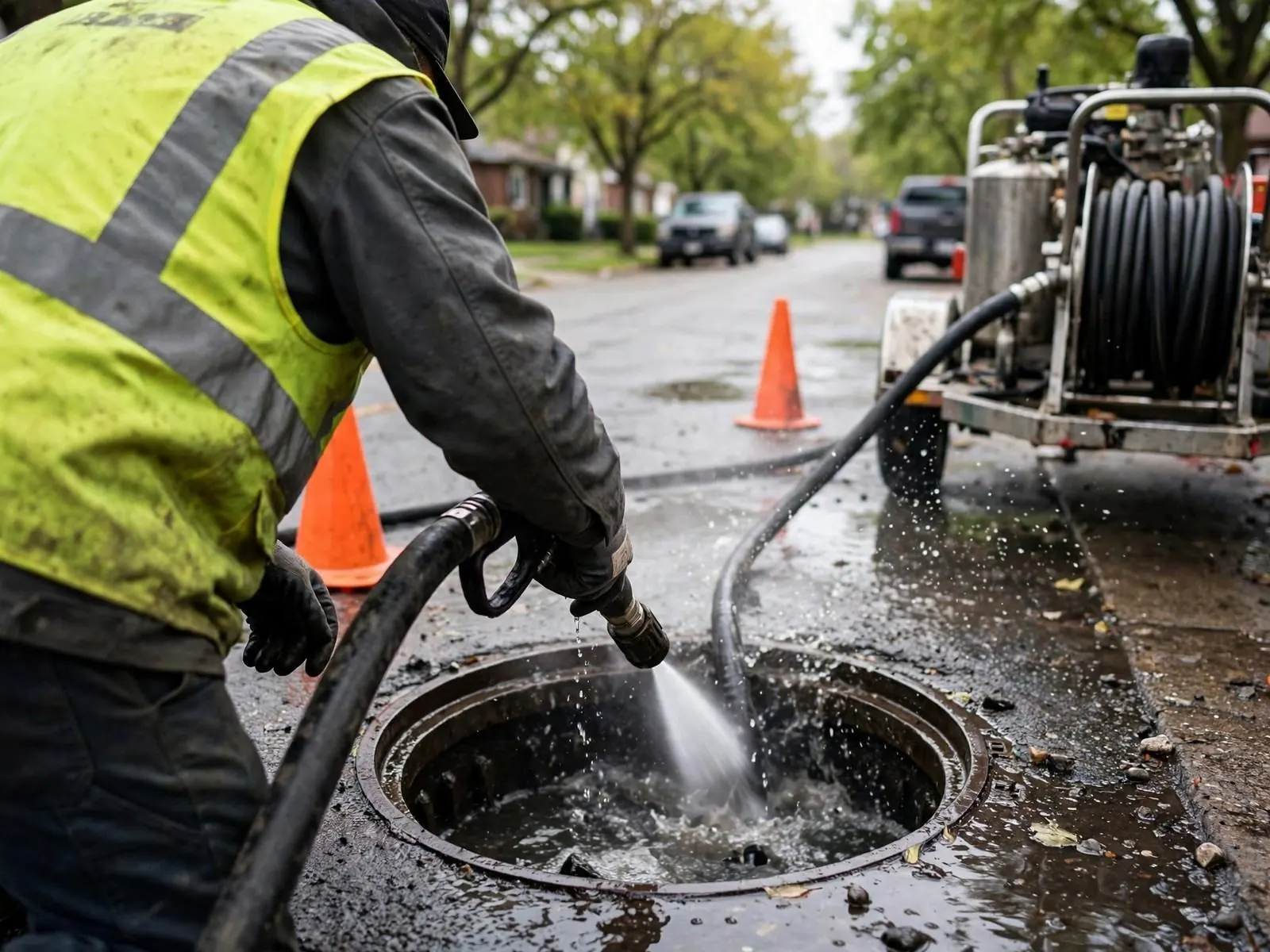
How a main line gets cleaned, in the order it happens
This is the sequence on a typical sewer cleaning visit.
- 1
Find the cleanout
The cleanout is the capped pipe that gives direct access to the main line. We locate it, open it carefully, and check whether anything is already pushing back.
- 2
Choose cable or water
A cable cuts through soft clogs and roots. High-pressure water scours the whole pipe wall. Which one fits depends on what the line is holding.
- 3
Clear the line
We work from the cleanout toward the street connection and keep going until flow is steady.
- 4
Camera the result
A camera confirms the line is open and shows anything that will bring the clog back.
- 5
Explain what we saw
You get the footage, the cause, and a plan for keeping it from repeating.
What we find in a main line and what it tells us
The clog itself is only half the story. This is what the cleaning and camera usually turn up.
| What we find | What it points to | What helps |
|---|---|---|
| Roots in a fine mat | Roots entering at a joint or crack | Cut the roots, then watch for regrowth. A repair may follow. |
| Grease and soap buildup | Years of kitchen and laundry use narrowing the pipe | Jetting to scour the wall. See Hydro Jetting. |
| Paper and wipes packed in | A flow problem or low spot catching solids | Clear it, then check the camera for a belly. |
| Hard scale on the pipe wall | Mineral buildup narrowing the bore | Scouring, then keep an eye on flow. |
| Pipe that looks broken or offset | Damage the cleaning cannot fix | See Sewer Line Repair for the repair options. |
Slow everywhere, not just one sink?
That pattern usually means the main line. Call dispatch and describe which drains are slow, and we will send the right tools.
Sewage backup tonight, with every drain affected
If the lowest drain is filling or sewage is surfacing, shut off water use at the fixtures, hold off on laundry, and keep people and pets away from the wet area. Our 24/7 line takes calls overnight and on weekends, and a same-day visit is possible if the calendar has room. Use (562) 488-9614 so we can send the right equipment.
Tell us what you see, which drain is the lowest in the house, and whether you know where the cleanout is. That one detail can save a lot of time.
Cabling versus hydro jetting
A cable, sometimes called a snake, is a rotating cutter on a flexible line. It is good at punching through a clog and cutting roots, and it is often the quicker and gentler first move. The limit is that it opens a channel and may leave buildup on the pipe wall.
Hydro jetting uses pressurized water to clean the full diameter of the pipe, which is why it suits grease and scale. It is not right for every pipe or every clog, and our Hydro Jetting page explains how we decide. We pick the method after looking at your line, not before.
Root intrusion
Roots go where water and tiny gaps are, and sewer joints qualify. A cable can remove a root mass, but it does not close the gap the roots came through. If the camera shows repeated root growth, we talk through ongoing maintenance and whether a repair on that section is worth doing.
If the pipe is also cracked, cleaning is a stopgap. Our Sewer Line Repair page covers what comes next.
Cleanout access: what to do before we arrive
A reachable cleanout is the difference between a quick start and a search.
- Find the cleanout cap, often a capped pipe near the house or along the side yard. If you cannot find it, tell dispatch and we will help you look.
- Clear a few feet around it of pots, boxes and plants.
- Keep pets inside and gate off the area.
- Note which drains are slow and which are fully blocked.
- Do not remove the cap if sewage is under pressure behind it. Wait for us.
- Turn off any irrigation that runs near the cleanout area.
What affects the price of main line cleaning
The price is agreed before we start. These are the reasons it varies.
Serving Pico Rivera and nearby
Our base is 8600 Whittier Blvd, and we cover nearby towns including Commerce. If your main line is old, ask us to camera it even when cleaning clears the clog, because the footage is what tells you if it will block again.
Standards and sources behind this page
Cable and jetting work follows the equipment maker's guidelines.
Questions we hear most
Yes. We dispatch 24/7, and a main line backup is treated as urgent after hours. We can often book a same-day appointment. (562) 488-9614 is the line to call.
If several fixtures are slow or the lowest drain backs up when you use others, the main line is the likely cause. A single slow sink is usually a local clog.
It depends on what is in the pipe. Cables are quick for soft clogs and roots. Jetting scours the walls and suits grease and scale. We decide once we see the line.
Cleaning removes the roots but does not close the gap they came through. If the camera shows repeated growth, we discuss maintenance or a repair.
Tell dispatch what the house looks like and we will help you locate it. If there is no cleanout, we can talk about adding one.
Yes. We camera the line to confirm it is clear and show you anything that could bring the clog back.
If your property has a septic tank, tell us when you call. It changes how we plan the visit.
Get the main line moving again
A slow drain tells you the pipe is working harder than it should. Phone the 24/7 line and we will clear it, camera it, and explain what we saw.