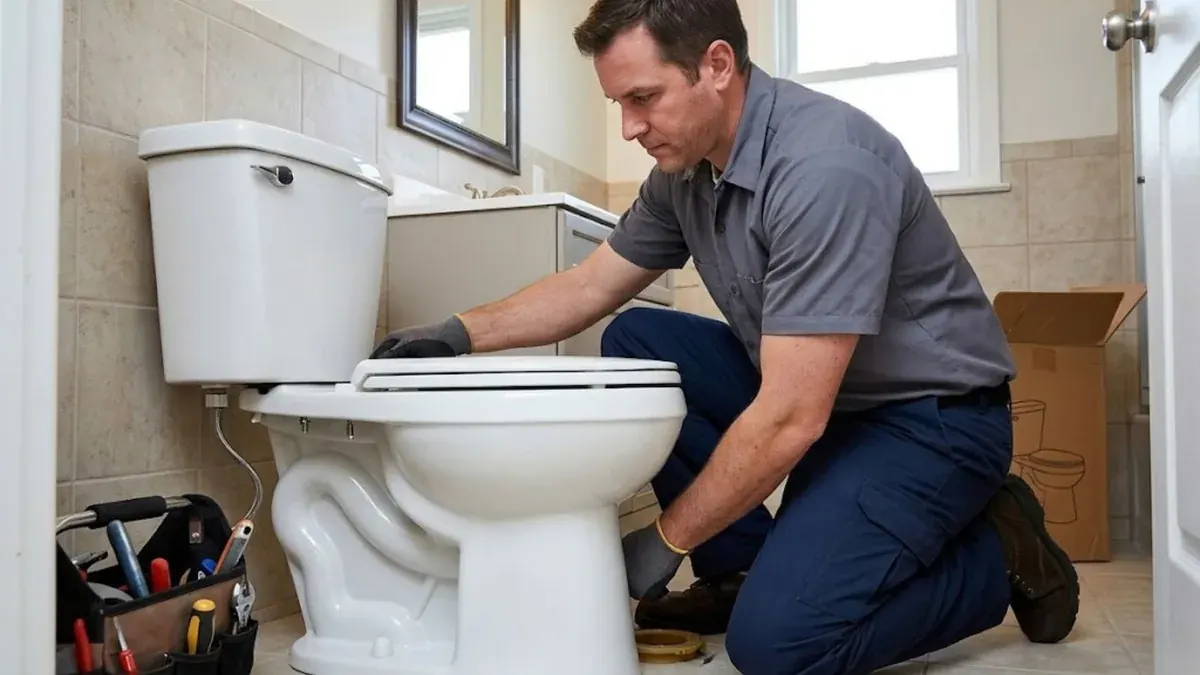
The direct answer on toilet paper
Toilet paper is made to break apart in water, but it still needs room and flow to do it. A wad of several sheets, a double dose of thick paper or a roll flushed whole can jam in the trap. A toilet with a weak flush, a partial clog or a low water level in the bowl clogs even on a normal amount.
There is no exact number of sheets that is safe for every toilet. The rule that works is simple. If the bowl does not clear in a single flush, stop flushing, then deal with the blockage before the water rises. If it keeps happening with normal use, call a plumber because something else is wrong.
Plunger, auger or call, by situation
Pick the tool for the clog you actually have.
| What is happening | First tool | When to stop |
|---|---|---|
| Bowl full and slow after a big flush | Flange plunger, slow steady pushes | If water does not drop after several tries |
| Paper jam with water level normal | Closet auger from the bowl | If the auger meets resistance it cannot pass |
| Wipes or hygiene items suspected | Auger gently, maybe retrieve by hand with gloves | If you cannot pull them out, call |
| Toilet clogs again within days | Check flush and water level | Book a plumber to inspect |
| Other drains gurgle or back up | Do not plunge | Call about the main line |
Never add drain chemicals to a standing toilet. They can splash and they rarely reach a deep blockage.
What about flushable wipes
A wipe labeled flushable still behaves differently from toilet paper. It is made of tougher fibers and does not fall apart as quickly in water. We have not tested every brand, so we cannot say which are fine and which are not.
The safe approach is to treat the toilet as a place for waste and toilet paper only. Put wipes, cotton products, paper towels and similar items in the trash. A clog that began with wipes often sits deeper than a plunger reaches, and a plumber with the right auger is the faster route.
Plunged twice and still full?
Stop and let us take it from here. Phone dispatch and we will send a plumber with an auger.
Clearing a paper clog without making a mess
Work in this order and stop the moment the bowl is rising.
- 1
Stop the water
Do not flush again. Lift the tank lid and push the flapper down, or turn the supply valve behind the toilet clockwise to shut the fill.
- 2
Protect the floor
Lay towels and put on gloves. Remove a little water with a cup if the bowl is near the rim.
- 3
Plunge with a flange plunger
Seat the plunger flange in the drain opening and push slowly to make a seal, then pull back up. A dozen or so steady strokes often break paper apart.
- 4
Try a closet auger
Feed the auger into the bowl, crank clockwise and pull back. This reaches the trap better than a plunger does.
- 5
Flush once and watch
Refill the tank, then flush and watch the bowl. If it clears and stays clear, you are done. If it rises, stop.
Pico Rivera water and sewer: what we can and cannot say
The City of Pico Rivera's Find Your Water Service Provider page shows that drinking water comes from either the City Water Division or Pico Water District, depending on your address. That page is about water supply, and our fact bank does not cover who maintains the sewer line outside your property or what rules apply to it.
So we will not guess. If the clog seems to come from the line outside your home, start by asking the City of Pico Rivera Water Division at 6615 Passons Blvd, which can point you to the right office. If the toilet is slow only at one fixture, the problem is almost certainly inside your house and fits within a regular visit from Toilet Repair.
When it is the main line, not the toilet
These signs mean the clog sits past your bathroom.
More than one fixture is slow
If the tub gurgles when you flush or the sink drains slowly at the same time, the blockage is downstream of several fixtures.
Water comes up in the lowest drain
A floor drain, tub or shower in the lowest part of the house backing up after a flush is a classic main line sign.
Gurgling after flushing
Air pushed back through a drain suggests the line is partly blocked or vented poorly.
A plunger does nothing at all
If the toilet does not move at all with a good seal and steady strokes, the clog is not in the bowl.
That calls for Sewer Line Cleaning or Drain Cleaning, not more plunging. Ring our 24/7 line if sewage is coming up inside the house.
Serving homes around Pico Rivera
We handle toilet and drain calls across Pico Rivera and nearby, including Norwalk and Commerce. Same-day appointments are offered when the schedule allows.
A clear price comes before work starts, which matters on a Saturday night when the bowl is full.
Standards and sources behind this page
Water-provider information comes from the City of Pico Rivera's service provider page.
Questions we hear most
Yes. A large wad can jam the trap, especially in a toilet with a weak flush. Flush smaller amounts in two flushes if needed.
They are tougher than toilet paper and break apart more slowly. We cannot vouch for every brand, so trash is the safer place for wipes.
Start with a flange plunger for a simple paper clog. If that does not work in a few tries, use a closet auger. If other drains back up, stop and call.
It is not a good idea. Drain chemicals rarely reach a deep blockage and can splash during plunging. Use mechanical tools instead.
A weak flush, a partial blockage, a buildup in the trap or a problem in the line can all cause it. Book a visit and we will test the flush and the drain.
If more than one fixture is affected, if a floor drain or tub backs up when you flush, or if you hear gurgling, the problem is downstream of the toilet.
Drinking water comes from the City Water Division or Pico Water District depending on address. For sewer questions, ask the Water Division at 6615 Passons Blvd to point you to the right office, because we have not verified who handles it.
Toilet full and rising?
We clear clogs with the price agreed before work starts. Reach the 24/7 line any hour.